Nutrients in the Water
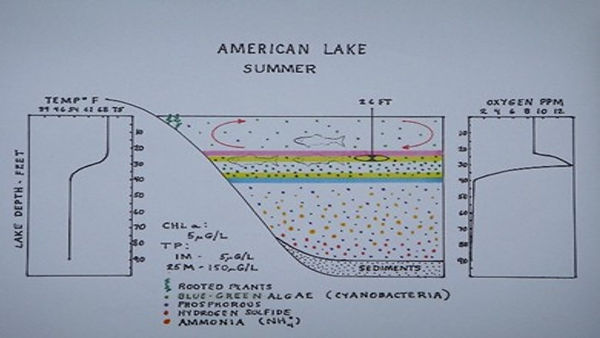
The pictures below illustrate the seasonal changes of nutrients in the water. These nutrients, especially phosphorous (P) and nitrogen (N) contribute to the growth of green algae, native and invasive aquatic plants and cyanobacteria "blooms", which can be toxic. (diagrams and research courtesy of Don Russell, lakeshore resident)
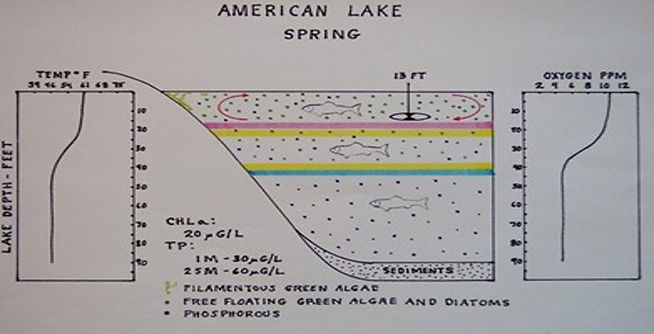
In the springtime, the shallow water warms up and filamentous green algae grows in the shallows. In some areas of the lakes, this growth is prolific and poses a problem for shoreline owners. Water is typically clear to about 13 feet, the lake is forming layers of warm and cold water. Oxygen and temperature are both higher in the upper layers. The cyanobacteria and free-floating algae are distributed more near the surface. Phosphorous is spread throughout.
In the summer rooted native and invasive plants grow in the shallows. The water becomes clear to about 26 feet. It is stratified into more distinct temperature layers. The warm surface water does not mix with the denser cold water below. There is a marked increase in oxygen content below 30 feet for several meters. Cyanobacteria concentrate in this region and below. We usually do not see them forming blooms in the summer. At about 50 feet oxygen level decreases rapidly. Near the bottom of the lake there is no oxygen. Without oxygen, the P is released into the water. Hydrogen sulfide and ammonia form. Water sampled near the top of the sediment will smell like rotten eggs.

In the fall, the upper layers of the lake remain quite clear. The rooted vegetation dies and rots into the bottom. The temperature and oxygen stratification becomes even more abrupt. The there is now almost no oxygen in the water below about 45 feet in depth. The nutrient load in that area is much heavier. Hydrogen sulfide and ammonia levels have increased. There are usually no cyanobacteria blooms at this season, although colonies of the bacteria can still be found in the water column.

In the winter, the air above the lake drops and makes the surface layer colder than the rest of the water column. This cold water is more dense and sinks downward. This downward pressure in turn, pushes the nutrient laden water below out of place, along the edges of the lake and P and N become mixed into the entire water column. This is called "lake turn-over". In American Lake it typically occurs in December. Winter storms mix the waters further. With P and N easily available in the area near the surface, where it is light, cyanobacteria begin to explode in growth. Some species can move up and down to maximize their exposure to light. The prevailing winds and water currents will move the colonies of bacteria to the north and west shores of the lake. The masses of colonies become visible as strips of greenish blue floating very near the surface. They look like paint that has been spilled across the water. The green does not wash up on shore like the spring-time filamentous green algae blooms. The blooms typically happen from December through February.
IF YOU SEE A BLOOM LIKE WHAT IS DESCRIBED STAY OUT OF THE WATER AND DO NOT LET YOUR PETS DRINK IT!!